
A few real-life examples of non-sexed or gender-neutral “inclusive” language in health and maternity care-related communications.
Examples of “inclusivity”
Our comments alongside these examples may help you compose a quick explanation of your objections.
Milli Hill, an award-winning, bestselling author has an up-to-date list of examples of the erasure of the word woman, and other gender-neutral “inclusive” examples here.
Form for registering with a new GP
This form is unclear. It confuses sex and gender, asking for “gender” while providing tick boxes for sex. Medics need to know what sex a patient is, in order to make sure any treatment is safe and effective. Clear questions result in clear and accurate answers.
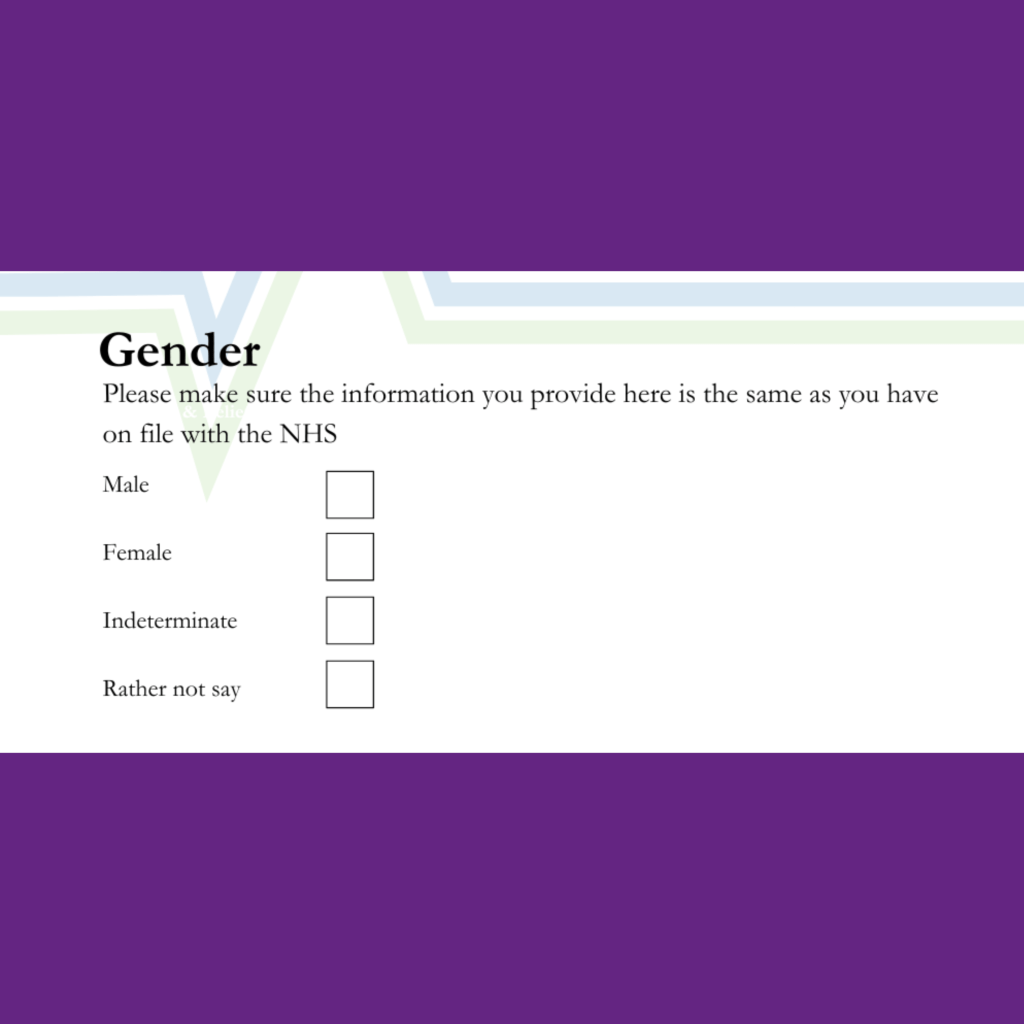
The phrase “indeterminate” is inappropriate as it is not a medical condition, nor is it clear language. If the question is “do you have a disorder of sexual development?” that should be on the health history, not the registration form.
Health app to track menstrual cycles
It’s a simple fact that healthcare for women and people with cycles is fundamentally underserved.
This is an example of additive language. “People with cycles” compromises the simplicity of the health information by making unclear who this information and technology is intended for.
Professional organisation statement of the RCOG and the RCM

Interspersing “inclusive terms” is not clear, but we think the intention is to encourage the use of both sexed and gendered language. However, both these organisations deal with people of one sex: women.
The use of the phrase “sex assigned at birth” should be replaced by “observed” or “recorded” for accuracy. Sex is not assigned at birth. When language is confusing and unclear it isn’t, as intended, “inclusive“, but it excludes.
There is a longstanding convention that health information should be suitable for people with a reading age of 9-11 years. Complicating information by adding unnecessary information and medical terms makes this confusing for many people. Read more about health literacy.
Unicef UK Baby Friendly Initiative Inclusivity and Language Statement
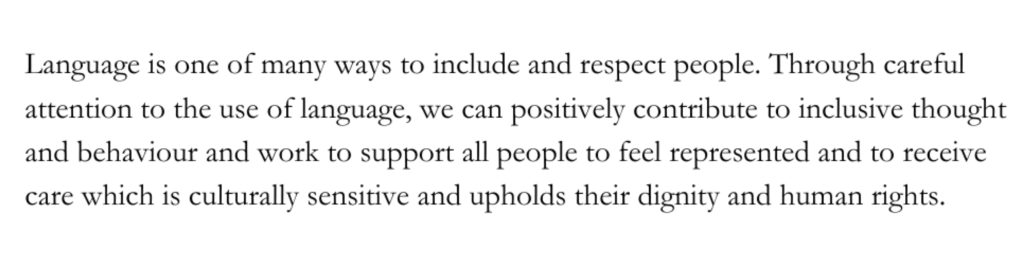
Baby Friendly’s position is to avoid the word “mother” and “woman” in their public facing communications. Occasionally they use “additive language” (for example “breastfeeding and chestfeeding“). There is no evidence that “people feel included and respected when receiving infant feeding support” as a result of this use of language. No impact statement has been done, and there was no indication that consideration had been paid to clarity and accessibility.
<< Chapter Seven: Workplace rights


 With Woman