Text and pictures: Heather Welford
Q&A: answering back!
Why our sex is important in health and maternity communications…and how you can meet the challenges.
With Woman now have years of experience encouraging a focus on women’s health and maternity care in policy, in campaigning and in discussions and communications about sex and gender identity.
We’re concerned about
* the language used in public-facing communications
* supporting and maintaining the focus on women’s health and maternity care
* protecting women’s single-sex services and spaces generally, and particularly within health and maternity care
We’re sharing some of the arguments we’ve met.
Our ‘Qs’ here are based on real life points.
Our ‘As’ are our suggested rejoinders, wherever you encounter a denial of the importance of being clear about biological sex.
It’s up to you to work out how robust and direct you make your answers. But we’d urge you not to be shy, not to be worried about others taking offence, and most of all, finding support among those you work with.
For more information and support, see our more detailed toolkit on Sex & Gender Identity.
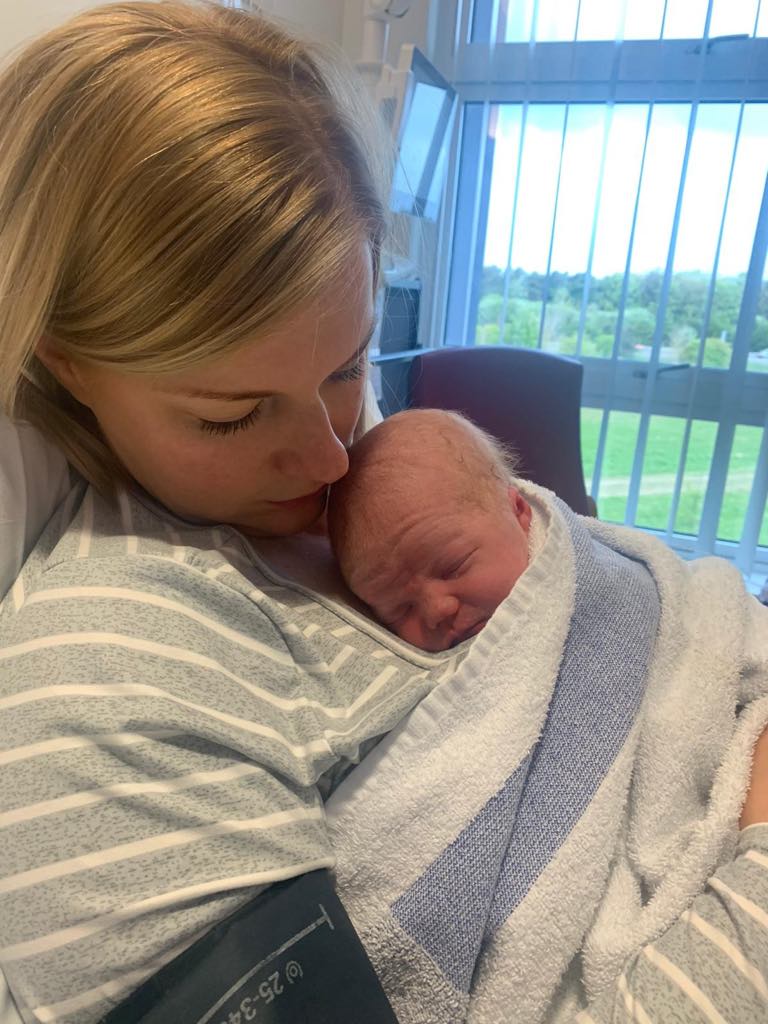
This is a mother mothering – she’s not just ‘a parent’.
Q. We want to run a survey of our users, to find out if our service is successful. The previous surveys we’ve run ask about the participants’ ‘gender’ as the thinking was that this was more inclusive than getting them to tick a sex. We also ask about sex ‘assigned at birth’ , but there have been comments that this is no longer considered appropriate.
A. Data collection is important, but it’s only valuable if it’s accurate. Questions about sex, gender, gender identity, can lead to confusion and any results you get can lack credibility. If your service is related to any form of healthcare, then bear in mind that clear and accurate information about sex isn’t optional – it’s essential.
The Sullivan Review, published in March 2025, was commissioned by the UK government to highlight the ‘obstacles’ in this area, and to give good advice on avoiding them.
For example,
*don’t use ‘gender’ as a synonym for ‘sex’. Just ask people what sex they are. If you are trying to capture the possibility of them acquiring a gender identity, then you need to ask a separate question about this
*don’t use the phrase ‘assigned at birth’ – sex is observed and recorded
*to record sex, have two categories only, Female and Male. Do not use ‘intersex’ which is an outdated term for a number of variations/disorders in sexual development. It’s not another sex
Sullivan explains how the poor collection of data on sex and gender reassignment has made it difficult for different parts of the health service to communicate sometimes vital information. Clinical care, research and planning can be disrupted and made less effective. Sullivan explains how researchers are hampered, if they’re unable to compare results across different settings.
As the British Medical Journal warns:
‘Sex and gender should not be conflated in medical data. The target of any sex question should be sex. Accurate data are essential to clinical care, research, and health service planning. But in some data sets, the NHS have conflated the key demographic variables of sex and gender. This can decrease the integrity and reliability of data and potentially compromise healthcare.’
The phrase ‘assigned at birth’ as in ‘what was your sex assigned at birth?’ or ‘is your gender the same as your sex assigned at birth?’ is highlighted in the Sullivan review as being ‘inaccurate and misleading’ . Of course, no one ‘assigns’ sex. As Sullivan says, ‘sex is determined at conception and typically observed in utero or at birth. An individual’s sex is not determined by their birth certificate, it is merely recorded on their birth certificate. In very rare cases an infant’s sex may be inaccurately recorded at birth, but this does not imply that sex is merely an assigned label rather than an inborn characteristic.’
You should aim at best practice in data gathering, with clear, scientifically-correct terminology. ‘Assigned at birth’ has become more common in recent years, but the language comes from the extremely rare instances of an infant’s birth sex being unclear or ambiguous. There’s no reason to use it routinely.
Q. We want to be inclusive of everyone who uses our service. We want to make sure people who say they are trans men, or non-binary, feel welcome and that our service is for them, too. That’s why we talk about our help for families and parents, rather than using words like ‘women’ and ‘mothers’.
A. In your personal, individual dealings with your colleagues, clients, patients or service users, of course you can follow any stated wishes they have about their name, their pronoun use and about their chosen self-description. It’s something to include on notes and records where appropriate.
However, when designing general communication such as a leaflet, poster or public health campaign it’s clearer and more inclusive to use easily-understandable, plain language.
If you’re promoting anything to do with women’s health, with maternity care, with support for mothers or mothers to be, ‘woman’ or ‘female’ or ‘women and girls’ or ‘mother’ are the most inclusive words possible. Every individual knows what sex he or she is.
Importantly, you risk losing clarity when you complicate the description of your target group. Women whose first language isn’t English, or women with literacy problems, may find it harder to understand when you use words which add to the message (for example, use of phrases like ‘women and birthing people’) or which don’t clearly name your hoped-for readership (for example, ‘people with a cervix’).

It’s clear: using sexed language avoids muddied waters.
Q. OK….what about using ‘women and people who menstruate’ in our poster about avoiding toxic shock syndrome? Someone’s suggested using ‘additive language’ like this is the way to go, so we don’t offend anyone.
A. Some trans activists favour the ‘and people’ language. A second group are those who think it’s kind and inclusive. A third group are those who recognise the language is confusing and clunky, but are scared to say so in case they’re criticised.
The very tiny number of women who describe themselves as something else know they’re biologically women, and so they’re not excluded.
If they feel discomfort at sexed language, their rights not to feel uncomfortable shouldn’t override other women’s need for clarity and acknowledgment of their sex.
And there are many reasons why some females don’t menstruate (age, pregnancy, breastfeeding, some health conditions). It seems highly unlikely that any of these non-menstruating women would feel uncomfortable because your poster, notice or invitation mentions girls or women only.
This detailed article clearly explains the importance of sex based language in maternity care. Effective Communication About Pregnancy, Birth, Lactation, Breastfeeding and Newborn Care: The Importance of Sexed Language
Q. But why can’t we say ‘we have free products to help people with periods’ or ‘menstruators’? After all, some trans men or non-binary people have periods.
A. Of course they do. Individuals who say they aren’t women, but men, or non-binary, will menstruate at various points in their life because they remain female. The issue is that pretending it’s ‘people’ in general who have periods, or using ‘menstruator’ to avoid the use of a sexed word like ‘woman’ or ‘girls’ is unhelpful. It makes menstruation seem like an arbitrary event (could happen to anyone!) instead of a deeply sexed phenomenon, part of our female experience. This obscures the sex-related inequality in society (in the example here, the organisation offering free period products is doing so to redress sex-related poverty).
Q. We’re not convinced. Why does it matter that we say ‘people with periods’ though? Or ‘birther’ meaning someone who gives birth? Some users of the health and maternity services prefer this sort of gender neutral language.
A. Have you done an impact survey on this? Are you risking making assumptions? We might assume that women who describe themselves as something other than women, or maintain that pregnancy and birth doesn’t make them a ‘mother’, prefer to see ‘inclusive language’ but in fact we’ve never seen evidence of this. We’ve never seen any proper consultation or anything that shows it reduces misunderstanding or promotes clarity.
Even if some women prefer de-sexed language, is there any evidence their preferences are stronger or more worthy of concern than the understanding or the preferences of other women and mothers (obviously, the much greater majority)?
We know many women may feel strongly that they want to be regarded as ‘women’ and ‘mothers’ and to have that reflected in the language you use, and they read, to communicate your services.
Q. Where I work, we have a policy to use gender neutral language whenever we can.
A. You need to track down the policy and the author/s. Is it ever reviewed? Can it be changed?
When we have questioned the notion of a ‘policy’ in a workplace or organisation, further enquiries reveal the policy doesn’t exist. The language has been adopted and then used without any policy being in place. So first step: check it out!
Q. Yes, we checked it. It’s there. Someone devised a social media policy and we’re now putting out information about our clinic, because we are advised to ‘use gender neutral terms when possible’.
A. A clinic for a female-specific condition? Now is the time to challenge. Recognise who you need to convince.
Who really benefits from hiding, minimising or erasing the fact that only women have a cervix, for example? Or experience periods? Why deny that only women experience health conditions like endometriosis, or uterine fibroids or cervical cancer? Or who experience mental health difficulties during pregnancy and birth (men’s mental health problems exist, but their cause, context and presentation are different)?
Back to arguing for an impact survey!
Q. What about keeping the word ‘woman’ or ‘mother’ and adding something to it? We could say ‘women and birthing people’.
A. No one giving birth is anything other than a woman. This ‘additive language’ is an attempt to acknowledge that a few women choose a different identity (typically ‘transman’ or ‘non-binary’, but there are many other identities). But it can add unnecessary confusion.
Q. Could we use the word ‘parent’ instead of ‘mother’ or ‘father’?
A. Using ‘parent’ can remove the importance of mothers whose relationship with a young infant is different from that of a father or indeed another woman in a same-sex relationship with the baby’s mother. For example, if you want to offer peri-natal mental health services for mothers, then say so. If you want to explain the importance of skin-to-skin contact after the birth, then explain the physical and psychological connection between the mother and the baby. Avoid talking about ‘parent and baby’ skin-to-skin.
Mothers are not swappable for anyone else!
Don’t use patients, individuals, participants when you really mean ‘mother’.
There’s evidence that if you want to draw in fathers with the use of the word ‘parent’, it doesn’t work well. Fathers don’t recognise you mean ‘fathers’ unless you spell it out.
******************
NB: the UK Supreme Court ruled that under the Equality Act 2010,
*A ‘woman’ is a biological woman or girl (a person born female)
*A ‘man’ is a biological man or boy (a person born male)
This is a very welcome clarification.
The ruling may not have any direct impact on your service or the language you use in your communications, but it may help you in explaining your position.
An important help for you could be the following paper on the ethics of language choice. There are examples in the paper of desexed language causing problems in research and in the recruitment of research participants. Some solutions are offered.
Munzer, M., Jameson, N., Harris, A. et al. Sex and Gender Identity: Data Collection and Language Considerations for Human Research Ethics Committees and Researchers.
J Acad Ethics (2025). https://doi.org/10.1007/s10805-025-09605-3
With Woman began in 2020.
We are a group of women – all of us workers, volunteers, campaigners or activists in the world of maternity and women’s health.
All of us have major concerns about the ways that the removal of sexed language can contribute to the eroding, minimising or in some cases the erasure of the importance of sex. This is harmful to women. Many of us have been threatened, cancelled, ostracised, even sacked, for questioning the ideology and practice that leads to the concerns…and many others feel fearful of doing so openly.

 With Woman
Leave a comment